

# Headings
What Are Minimum Wages Rights in India?
Who Is Covered Under Minimum Wage Laws?
What Does the Law Guarantee?
Why Minimum Wage Violations Are Common
How Employers Bypass Minimum Wage Rules
What You Can Do If You Are Underpaid
Conclusion
# Content
Minimum wages rights in India are designed to protect workers from exploitation. On paper, the law is clear: every worker must be paid at least the minimum wage set by the government. In reality, violations are common, and millions of workers are still underpaid.
What Are Minimum Wages Rights in India?
Minimum wage is the lowest amount an employer is legally required to pay a worker for their work. It varies by state, skill level, and type of job.
Who Is Covered Under Minimum Wage Laws?
Most workers in India are covered, especially those in:
– Construction
– Agriculture
– Factories
– Domestic work
– Shops and establishments
However, many workers in the informal sector remain unprotected in practice.
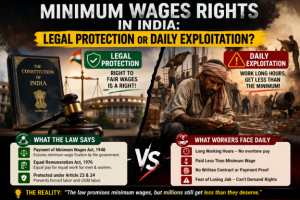
What Does the Law Guarantee?
:contentReference[oaicite:0]{index=0} ensures:
– A legally fixed minimum wage
– Protection against underpayment
– Timely payment of wages
In addition, :contentReference[oaicite:1]{index=1} expands coverage and aims to standardize wage laws across sectors.
Why Minimum Wage Violations Are Common
Despite laws, violations happen because:
– Workers lack awareness of their rights
– Fear of job loss prevents complaints
– Weak enforcement in many areas
– Informal employment without contracts
This creates a system where exploitation continues quietly.
How Employers Bypass Minimum Wage Rules
Employers often avoid paying minimum wages by:
– Paying in cash without records
– Showing fake attendance or hours
– Hiring workers as “temporary” or “contract”
– Avoiding written agreements
These tactics make it difficult for workers to prove underpayment.
What You Can Do If You Are Underpaid
If you are not receiving minimum wages:
– Ask for wage records or payment proof
– File a complaint with the labour department
– Approach labour courts or authorities
– Seek help from worker unions or NGOs
Taking action is difficult, but it is legally supported.
Conclusion
Minimum wages rights in India exist, but enforcement remains weak. The biggest gap is not in law, but in awareness and action. Until workers know their rights and systems enforce them strictly, underpayment will continue.
