

# Headings
How Bad Is River Pollution in India?
The Biggest Reason: Sewage and Industrial Waste
Religious Practices or Environmental Damage?
Encroachment and Urban Failure
Agriculture’s Hidden Role in Water Pollution
Why Solutions Are Not Working
What Actually Needs to Change
Conclusion
# Content
India’s rivers and lakes are in a serious crisis. While they are worshipped and respected in words, the ground reality is the opposite — they are among the most polluted water bodies in the world.
How Bad Is River Pollution in India?
The scale of pollution is massive. A large percentage of wastewater in India flows directly into rivers without proper treatment. This turns rivers into open drains instead of natural ecosystems.
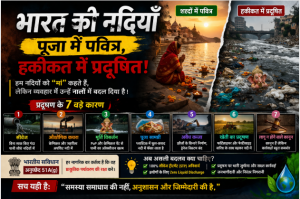
The Biggest Reason: Sewage and Industrial Waste
The primary cause is untreated waste.
– Cities dump sewage directly into rivers
– Industries release toxic chemicals
– Heavy metals like mercury and lead contaminate water
This makes the water not just dirty, but dangerous.
Religious Practices or Environmental Damage?
Cultural practices also contribute:
– Idol immersion using harmful materials
– Dumping plastic-wrapped offerings
– Mass gatherings increasing waste load
The contradiction is clear: rivers are treated as sacred, but not protected.
Encroachment and Urban Failure
Urban planning has failed badly:
– Lakes are encroached for construction
– Natural drainage systems are blocked
– Cities convert water bodies into dumping zones
In some cities, lakes even produce toxic foam due to chemical buildup.
Agriculture’s Hidden Role in Water Pollution
Farming practices add to the problem:
– Excess fertilizers and pesticides
– Runoff entering rivers during rain
– Oxygen levels drop, killing aquatic life
This process silently damages ecosystems over time.
Why Solutions Are Not Working
India has plans, but execution is weak:
– Sewage Treatment Plants are insufficient
– Laws exist but enforcement is poor
– Industries bypass regulations
The system knows the problem but fails to act consistently.
What Actually Needs to Change
Real solutions require strict action:
– 100% sewage treatment before discharge
– Zero Liquid Discharge for industries
– Heavy penalties for pollution
– Public awareness and accountability
Without enforcement, policies remain useless.
Conclusion
India’s rivers are not just polluted — they are being systematically destroyed. The biggest problem is not lack of solutions, but lack of discipline and accountability. Until behavior changes, no cleanup mission will succeed.
